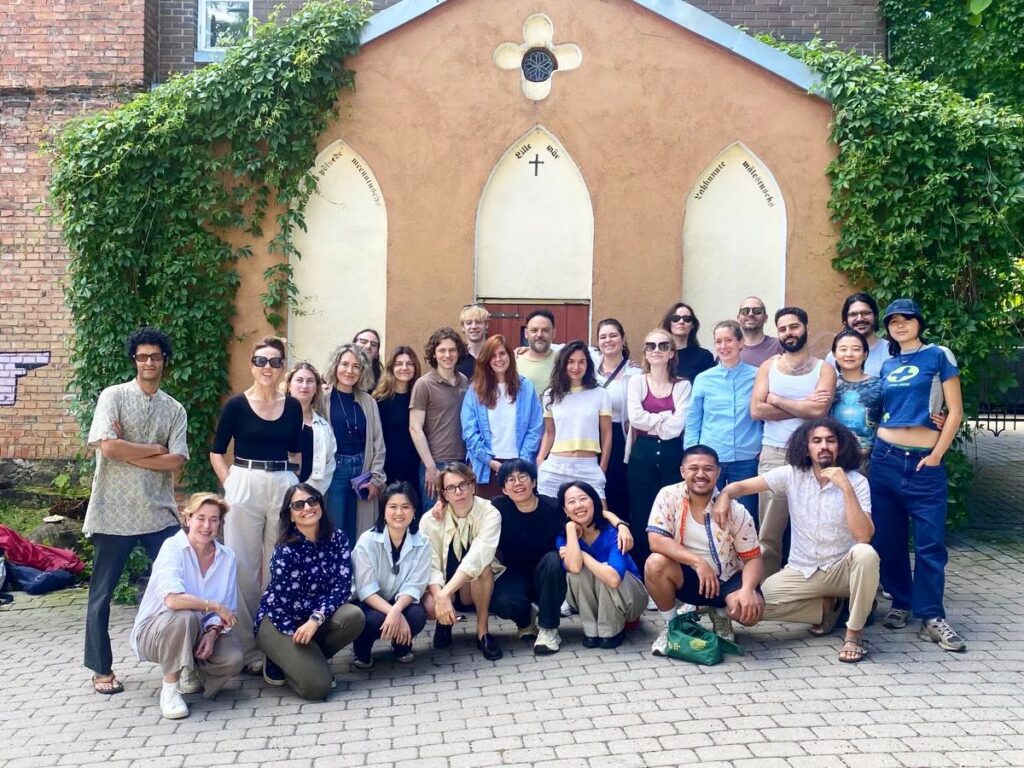
TorinoFilmLab’s ScriptLab & Story Editing Lab module in Tartu
From 17 to 23 June, Tartu hosted a module of TorinoFilmLab’s ScriptLab & Story Editing Lab, bringing together an international group of screenwriters, directors, script consultants and mentors.
TorinoFilmLab’s ScriptLab is one of Europe’s best-known script development programmes. It is built around a longer international working process: over several months, participants develop their projects through residencies, online modules, group work and one-to-one meetings with experienced script consultants.
According to official information from TorinoFilmLab, the 2026 ScriptLab received 857 applications, of which 16 film projects were selected. In total, the programme brings together 22 film professionals from 21 countries. Estonia is also represented in this year’s ScriptLab: director-screenwriter Eeva Mägi was selected for the programme with her project Mo Tori. In addition, Moonika Siimets, Tushar Prakash, Helen Takkin, Kerli Kirch Schneider and Marion Koppel received individual mentoring in Tartu over four days.
The fact that one of ScriptLab’s residency modules took place in Tartu is a significant event for the Estonian film community. Programmes like this bring not only international guests, but also working methods, contacts and discussions that usually take place in larger European film centres.
One part of the Tartu module was also a public lecture for the Estonian film community. On 18 June, French screenwriter and script consultant Philippe Barrière gave a lecture at the Tartu Centre for Creative Industries titled “The Audience Journey: From Feedback to Structure.”
The background of the programme’s tutors reflects the high level of ScriptLab: in Tartu, participants worked with tutors whose experience extends to Cannes, Locarno, Sundance, Biennale College Cinema and other international development programmes and festivals.
For Tartu, the ScriptLab module was an opportunity to show that developing a film region is not only about offering filming locations or production support. It is just as important to bring knowledge, international networks and a professional development environment here. Encounters like these also help the local film sector grow: new contacts are made, understanding of the international development process broadens, and Tartu becomes more visible as a place where film stories can develop even before the shooting period begins.
The Tartu module of the programme took place in cooperation with Tartu Film Fund, TorinoFilmLab, the Estonian Film Institute and Creative Europe Media Desk Estonia.
More information: Signe Somelar-Erikson, signe@lmk.ee